Industrial Butterfly Valves Performance Analysis
Selecting the right flow control mechanism often comes down to a balance between spatial constraints and operational efficiency. In large-bore piping systems, the requirement for a compact yet high-capacity shut-off device leads many engineers toward a specific category of quarter-turn valves.
The technical shift toward minimizing pressure drop while maintaining a tight seal has redefined how fluid systems in wastewater and chemical processing are designed. This evolution prioritizes mechanisms that can handle high volumes without the massive footprint associated with traditional gate valves.
For those managing complex infrastructure, understanding the mechanical nuances of Industrial Butterfly Valves is essential for reducing long-term maintenance costs and ensuring system reliability across diverse environmental conditions.
Mechanics of Quarter-Turn Flow Control
At its core, the butterfly valve operates via a rotating disc that pivots on a central axis. Unlike linear valves that move a wedge or plug up and down, this mechanism requires only a 90-degree turn to transition from fully open to fully closed, which significantly reduces the torque required for operation.
This rotational logic allows for a much thinner profile, making it an ideal choice for tight spaces where a traditional globe or gate valve would be prohibitively bulky. In the context of casting and metal processing, the precision of the disc's seat is what determines the overall efficiency of the shut-off.
Critical Design Components and Materiality
The longevity of a valve is determined by the synergy between the body, the stem, and the disc. In industrial settings, the body is typically cast from ductile iron or stainless steel to ensure structural integrity under pressure. The stem must be engineered to resist shear stress while providing a smooth interface for the actuator, whether manual or automated.
Material selection is not merely about strength but about chemical compatibility. For instance, in water treatment plants, the interaction between the valve components and corrosive additives can lead to premature pitting if the wrong grade of alloy is used. This is why metallurgy in the casting process is a critical quality control point.
The disc itself acts as the primary barrier. Depending on the application, discs may be polished to reduce turbulence or coated with specialized polymers to prevent adhesion of viscous materials, ensuring that the valve does not "stick" after prolonged periods of inactivity.
Seal Integrity and Leakage Analysis
Sealing is the most challenging aspect of butterfly valve engineering. Soft-seated valves utilize elastomers like EPDM or Nitrile to create a bubble-tight seal, which is essential for low-pressure applications where any leakage would be unacceptable. However, these materials have thermal limits.
High-performance sealing is achieved not through the hardness of the material, but through the precision of the contact surface. A deviation of a few microns in the seat casting can result in significant parasitic leakage over time.
For high-temperature or abrasive media, metal-seated valves are employed. These rely on a metal-to-metal interface, often enhanced by precision grinding. While they may not achieve the same absolute zero-leakage as soft seats in low-pressure scenarios, their durability in extreme heat makes them indispensable for steam and chemical transport.
Performance Benchmarks Across Media
Evaluating the suitability of a valve requires looking at the flow coefficient (Cv) and the pressure drop across the disc. In clean water applications, the impact is minimal, but as the viscosity of the fluid increases, the disc creates more turbulence, which can affect the upstream pump efficiency.
By analyzing relative performance indices, engineers can determine where a butterfly valve outperforms other types. The following conceptual model illustrates the relative suitability of these valves across different industrial requirements based on typical operational parameters.
Figure 2. Relative Operational Suitability Index
Integration in Modern Infrastructure
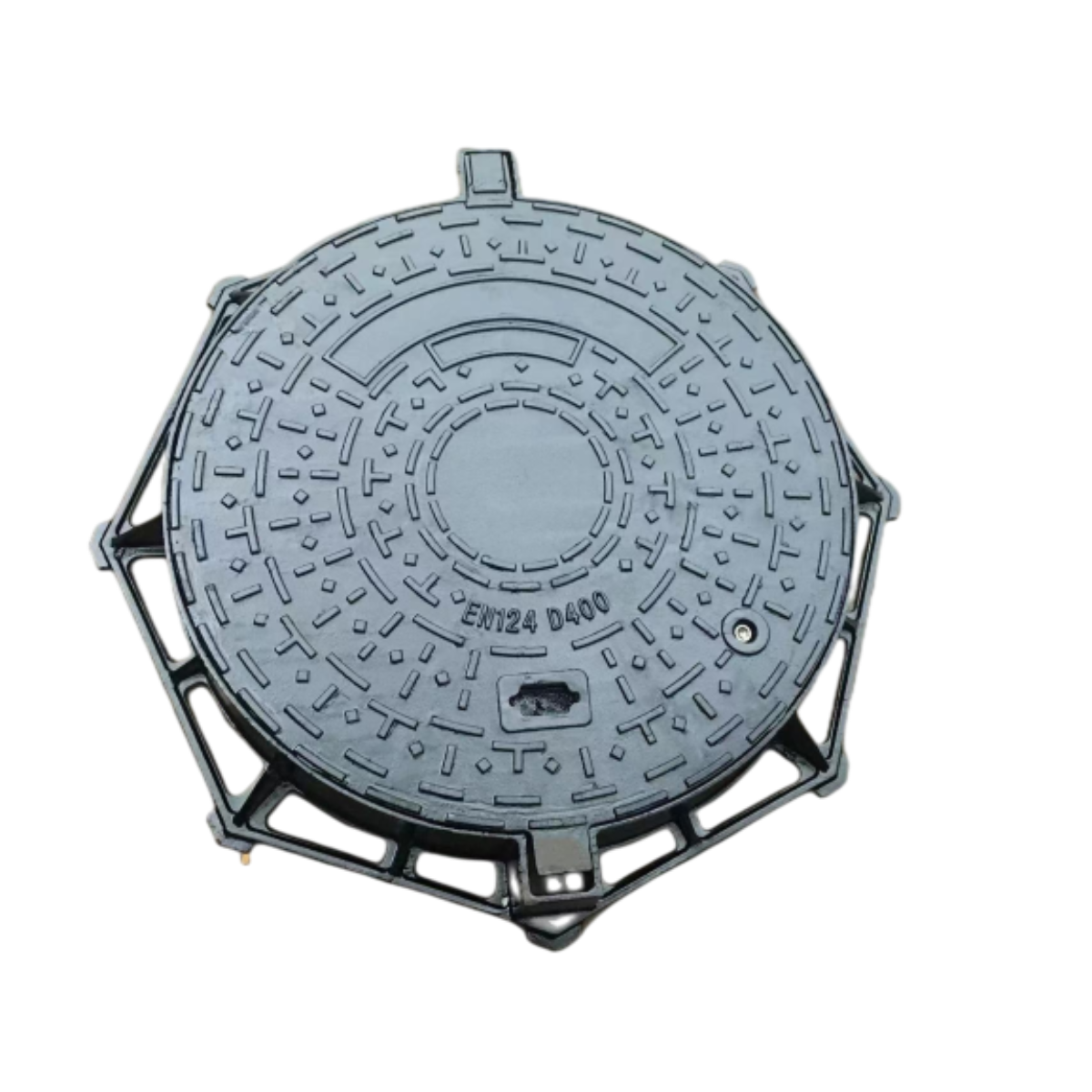
In the realm of urban utility management, these valves are frequently paired with manhole covers and pipe fittings to create a cohesive underground network. For example, a typical industrial setting utilizing water supply systems requires a valve that can be operated from a surface box, ensuring that technicians do not need to dismantle large sections of the grid to perform a shut-off.
The synergy between the valve and the surrounding pipe fittings—such as elbows and tees—is crucial for minimizing stress on the joints. HEBEI YONGQIAN TRADING CO.,LTD. focuses on this holistic approach, ensuring that the casting quality of the valve matches the durability of the accompanying pipe fittings to prevent systemic failure under high-pressure surges.
Adaptation to Extreme Environments
Operational failure often occurs not because of a design flaw, but because of environmental mismatch. In coastal regions, salt-air corrosion can seize a valve stem in months. This necessitates the use of galvanized coatings or high-grade stainless steel alloys that provide a passive oxide layer against chloride attack.
Furthermore, thermal expansion and contraction in outdoor installations can warp the seating area of a valve. Engineering the tolerances to account for these shifts is what separates industrial-grade equipment from commercial-grade alternatives. The use of ductile iron in the body helps absorb these stresses without cracking.
The integration of automated actuators also allows these valves to be managed remotely in hazardous zones, removing the need for manual intervention in areas where toxic fumes or extreme temperatures would pose a risk to personnel.
Comparative Selection Framework
Choosing between a butterfly valve and a ball or gate valve requires a technical trade-off analysis. While ball valves offer an exceptional seal, they are significantly heavier and more expensive at larger diameters. Gate valves are excellent for full-bore flow but are slow to operate and occupy more vertical space.
The decision framework should prioritize the frequency of operation and the required precision of flow regulation. If the valve is used primarily for on/off service in a large pipe, the butterfly design is almost always the most cost-effective and space-efficient solution.
The following table provides a comparative analysis of selection factors to help engineers determine the most appropriate valve type for specific operational constraints.
| Selection Factor | Butterfly Valve | Ball Valve | Gate Valve | Globe Valve |
|---|---|---|---|---|
| Space Requirement | Minimal | Moderate | High | High |
| Actuation Speed | Fast (90°) | Fast (90°) | Slow (Linear) | Slow (Linear) |
| Pressure Drop | Low-Medium | Very Low | Lowest | Highest |
| Seal Tightness | Good | Excellent | Moderate | Excellent |
| Cost (Large Bore) | Lowest | Highest | Moderate | Moderate |
| Flow Regulation | Moderate | Poor | Poor | Excellent |
Questions & Answers
A butterfly valve is preferred when space is limited and rapid actuation is required. Because it is a quarter-turn valve, it operates much faster than a gate valve, which requires multiple turns of a handwheel to move the wedge. Additionally, for large pipe diameters, butterfly valves are significantly more lightweight and cost-effective while still providing acceptable shut-off capabilities for most industrial fluid applications.
Soft seats, made from elastomers like EPDM, provide a bubble-tight seal and are ideal for low-to-medium pressure systems and clean fluids. Metal seats are used for extreme temperatures, high-pressure steam, or abrasive media that would shred a rubber seal. While metal seats may have a slightly higher leakage rate in very low-pressure scenarios, they offer vastly superior durability and chemical resistance in harsh environments.
Sticking usually occurs due to the accumulation of debris, mineral scaling, or corrosion on the disc or seat. In wastewater applications, solids can settle around the disc when the valve is left closed for long periods. To prevent this, engineers often specify polished disc surfaces or implement periodic "cycling" of the valve to clear the seating area and ensure the actuator can still rotate the disc freely.
While they can regulate flow, butterfly valves are not as precise for fine throttling as globe valves. The flow characteristics are non-linear, meaning small changes in the angle of the disc can cause disproportionate changes in flow. However, for general flow reduction or "rough" throttling in large-diameter pipes, they are sufficient and far more practical than installing a massive globe valve.
Cavitation occurs when the local pressure drops below the vapor pressure of the liquid, creating bubbles that collapse violently against the disc. This can cause pitting and erosion, especially on the trailing edge of the disc. To mitigate this, engineers select materials with higher hardness or design the system to ensure the pressure drop across the valve remains within safe operational limits.
Casting quality directly impacts the uniformity of the valve body. Porosity or inclusions in the cast metal can create weak points that lead to stress cracks under pressure. Furthermore, the precision of the cast seat determines how well the disc seals. High-quality casting ensures that the valve can withstand thousands of cycles without the seat wearing down or the body failing under hydraulic shock.
Final Thoughts
The selection of a flow control device is a critical decision that influences the entire lifecycle of an industrial facility. By prioritizing a balance between material science, sealing technology, and spatial efficiency, operators can significantly reduce downtime and maintenance overhead.
As infrastructure continues to modernize, the integration of high-precision casting and durable alloys will remain the standard for ensuring system safety and reliability. Whether managing municipal water or chemical processing, the right valve ensures that the flow remains under control, regardless of the environmental pressure.